
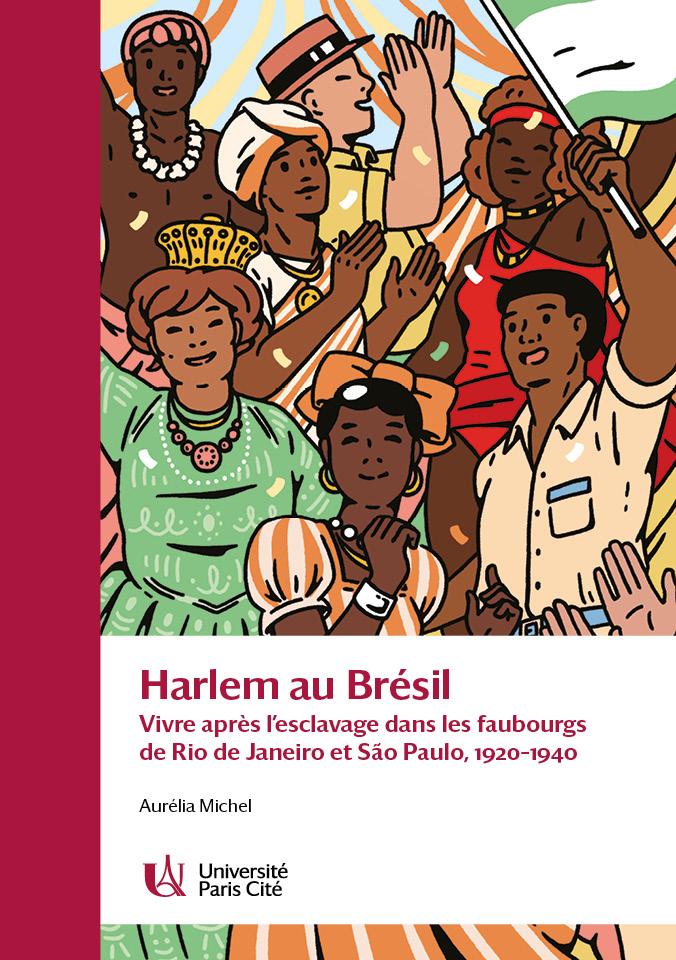
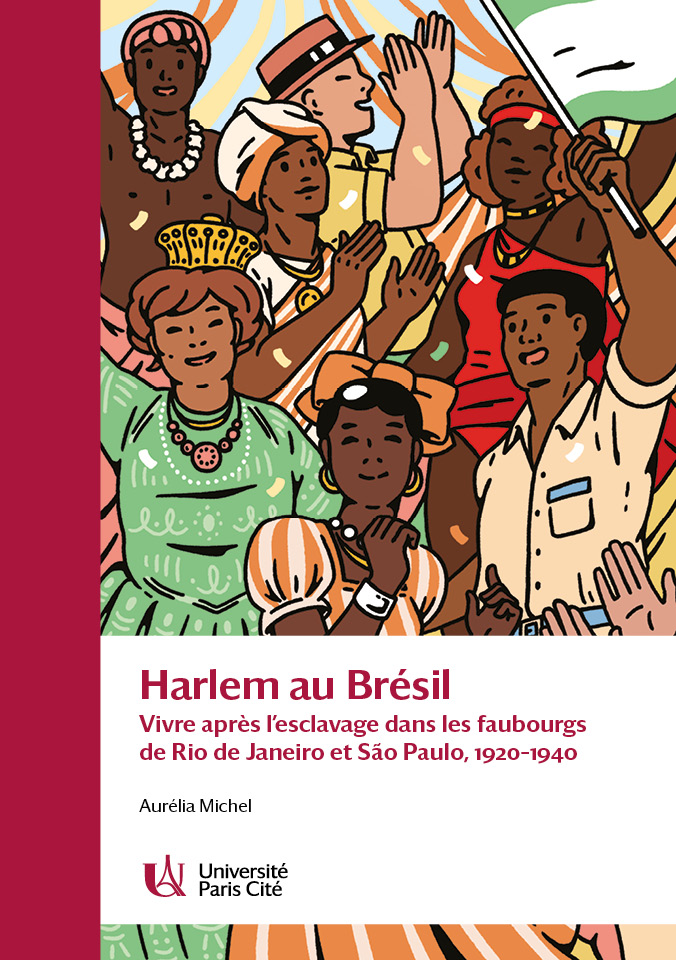
Harlem au Brésil Vivre après l’esclavage dans les faubourgs de Rio de Janeiro et São Paulo, 1920-1940
Abstract
This book examines the post-emancipation transition in Brazil. It advances the hypothesis of a “second abolition” that unfolded during the interwar period, two or three generations after the Emancipation Law of 1888. The study is based on field research conducted in two neighborhoods renowned for their Black populations, which were formed between 1920 and 1940 by Brazilian and foreign migrants arriving from plantation regions: Madureira, in Rio de Janeiro’s North Zone, and Casa Verde, in the northern part of São Paulo.
Rather than relying on the racial categories used in census data or contemporary sociological surveys—which appear to be of limited analytical value—the investigation reconstructs social groups according to their migratory status, their relationship to slavery, and their position within metropolitan space. To do so, it draws on a wide range of sources, including daily newspapers, municipal and parish archives, maps, samba school records, and interviews.
Drawing a parallel with Harlem’s cultural flourishing during the same period, the book shows that the 1930s opened a demographic, media, and political “window of opportunity” through which subaltern classes gained access to new forms of autonomy and participation: samba schools, Afro-Brazilian religions, labor mobilization, and political parties. As in Harlem and other centers of the Black Atlantic’s cultural revolution, this process of accelerated democratization remained incomplete and was accompanied by the racialization dynamics that characterize post-slavery societies.
Keywords
Post-slavery, Brazilian suburbs, Racialization, Samba schools, Vargas Era (1930–1945)Chapters
-
Avant-propos
-
Introduction
-
Partie 1 : Peuplement. La formation des subúrbios de Madureira et Casa Verde (1920-1940)
-
Urban Growth and the Production of the Subúrbios
-
The Formation of Madureira and Casa Verde (1910–1920)
-
The Subúrbios of Modernity, the 1920s
-
Suburban Condition and Socio-Spatial Contrasts in the 1930s
-
Partie 2 : Autour du carnaval. Socialisations à Madureira dans les années 1930
-
Madureira Ilustrada
-
From One Carnival to Another
-
Black Institutions in Madureira
-
Partie 3 : Pratiques religieuses et mobilités sociales à Madureira
-
Suburban Religions and the Destiny of the Nation
-
The Fakir and the Macumbeira
-
Partie 4 : Dimensions politiques du changement social à Madureira
-
The "1930 Revolution" in Madureira
-
The People of Madureira in the 1933 and 1934 Electoral Process
-
Partie 5 : Transmissions. Ancrage et mobilité à Casa Verde et Madureira
-
Making a Life in Madureira (1930–...)
-
Making a Life in Casa Verde (1930-...)
-
Conclusion
-
Glossaire
-
Liste des sources
-
Bibliographie
Metrics
Series
License

This work is licensed under a Creative Commons Attribution 4.0 International License.